A Content Audit That Helps Your Next Website Release
Identify what is accurate, useful, missing, and worth retiring before designing another page.
Create a usable inventory
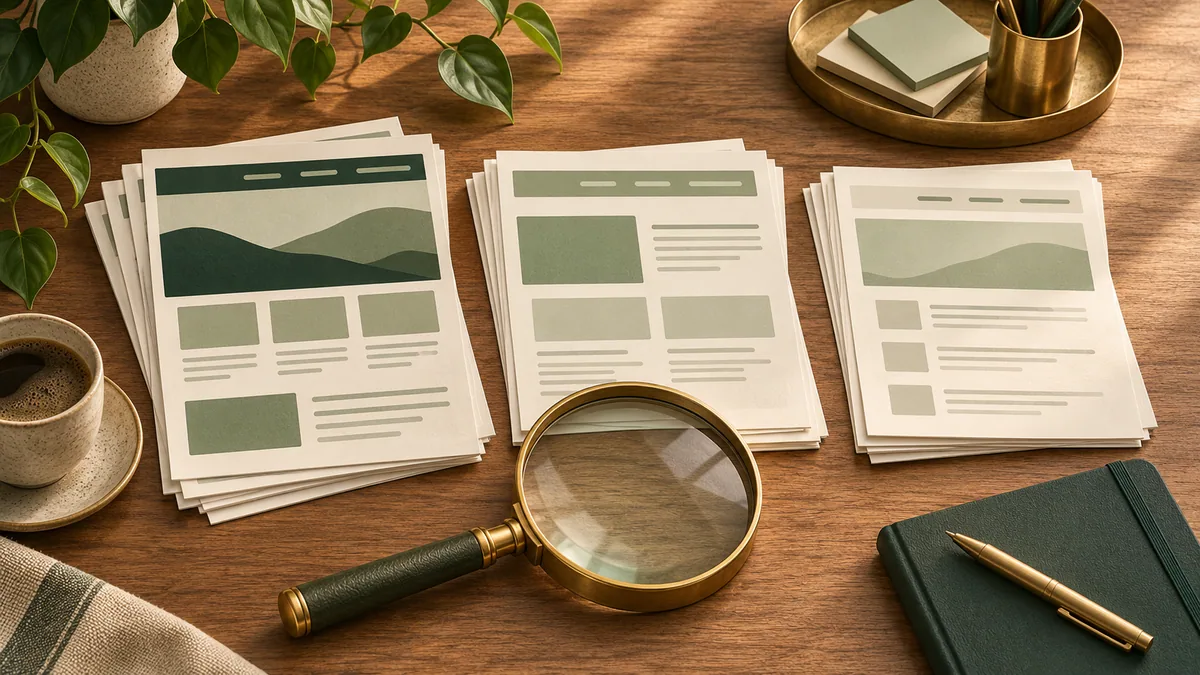
List the pages, documents, forms, and important assets people can reach. Include older pages linked from outside the website, not only the items in the current navigation.
Record the purpose of each item, its audience, its owner, and when its facts were last reviewed. A lightweight inventory is enough if it helps the team make decisions consistently. Avoid collecting columns that nobody will use.
Check facts and next steps
Verify business names, addresses, phone numbers, service descriptions, and pricing information against approved sources. Review every inquiry or purchase action and confirm that its destination works.
Distinguish documented evidence from unsupported marketing claims. Customer quotes, credentials, project results, and photographs need an appropriate basis and permission. Removing a questionable claim can be more useful than polishing its wording.
Decide what to keep, improve, or retire
Keep material that serves a clear visitor need. Improve content that is valuable but difficult to understand. Combine overlapping pages where doing so creates a clearer answer.
Plan redirects for retired addresses when a relevant replacement exists. Update internal links and search metadata as part of the same change. Deleting a page from the menu alone does not remove it from the website or from external links.
Give the content an ongoing owner
Assign responsibility for the facts that change over time and agree on a review schedule. Make it easy to report incorrect information and track the correction through to publication.
Use the inventory to guide the next release rather than treating the audit as a separate document. A smaller set of accurate, helpful pages is easier to maintain and gives design and development a clearer foundation.